DFlash for Local LLMs: Fast Inference & Governance Guide

Writer

Most local LLM performance conversations still sound like hardware shopping: buy a bigger GPU, quantize harder, or accept slower answers. DFlash changes that conversation. It is not just another tuning trick. It is a different way to think about inference capacity.
The headline claim is attractive: DFlash, a block diffusion approach to speculative decoding, has been reported to deliver up to roughly 6x lossless acceleration in research benchmarks, with practical results varying by model, backend, quantization, GPU, and workload. That last sentence matters. For IT leaders and FinOps teams, the important question is not “Can it go fast in a demo?” The better question is: Can this let us serve more useful AI work with the same governed infrastructure footprint?
This article reframes DFlash from a developer optimization into an operating model decision: when it can improve user experience, when it can reduce capacity pressure, and when it is just another shiny benchmark that does not change your cost curve.
Executive Takeaway
If you run local or self-hosted LLMs at low concurrency, especially for long-context workflows such as code assistance, document reasoning, RAG, or agentic task execution, DFlash can be a meaningful performance lever. It works best when your GPU has idle compute during decoding and enough spare memory to host a compatible draft model.
If your infrastructure is already saturated with high concurrency, or if your deployment relies on heavily quantized models where the draft model does not align well with the target model, the speedup may shrink or even disappear. Treat DFlash as a capacity multiplier candidate, not a guaranteed cost reduction button.
First, Fix the Name: DFlash, Not DeFlash
The project and paper use the name DFlash, short for Block Diffusion for Flash Speculative Decoding. I am using DFlash throughout this article for accuracy.
The concept is simple enough to explain without math-first thinking:
Classic LLM decoding is like approving one word at a time in a legal contract. Speculative decoding lets a junior reviewer draft the next paragraph, while the senior reviewer approves or rejects chunks. DFlash makes the junior reviewer draft the whole paragraph in parallel instead of word by word.
That is the mental model. The operational question is whether the senior reviewer, your target model, can approve enough of that draft to make the workflow faster.
Why This Matters to IT Leaders and FinOps Teams
For enterprise AI platforms, speed is not only a user experience metric. It is a governance and cost metric.
Slow inference creates several downstream problems:
- Users abandon approved internal tools and experiment with unmanaged alternatives.
- Teams overprovision GPUs to compensate for latency.
- Long-running workloads consume more GPU wall-clock time than expected.
- AI pilots look expensive before they prove business value.
- Tenant and platform administrators lose confidence in local AI economics.
DFlash matters because it attacks a specific waste pattern: idle compute during token-by-token decoding.
In many local single-user or low-concurrency scenarios, the GPU is not fully busy doing math. It is repeatedly moving model weights through memory to generate the next token. That means the system can feel slow even when expensive hardware is sitting underutilized.
The FinOps translation is straightforward:
If you can produce more accepted output tokens per expensive GPU pass, you improve the useful work extracted from the same infrastructure.
That may show up as lower latency, higher capacity, fewer GPUs needed for a pilot, delayed hardware upgrades, or simply a better user experience with the same sunk cost.
What the Original Hands-On Source Proved
The original source behind this article was not only a theory walkthrough. It followed a useful three-part structure that is worth preserving:
- Explain the mechanism behind DFlash and why block diffusion changes the speculative decoding cost model.
- Deploy it locally using a llama.cpp-style server workflow with Docker/LACP-style packaging, including separate baseline, MTP, and DFlash configurations.
- Benchmark the claim with reproducible-style tests to check whether the speedup is real and whether quality remains close to the baseline.
That structure is valuable for leaders because it prevents benchmark theater. It moves the discussion from “the paper says it is fast” to “does this improve my actual local AI operating model?”
The source also used a helpful starting comparison:
| Strategy from the source material | Reported throughput | Quality framing | How to read it |
|---|---|---|---|
| Auto-regressive Qwen 3 8B | ~48 tokens/sec | Baseline | One-token-at-a-time decoding |
| Block diffusion standalone | ~97 tokens/sec | Lossy | Faster, but not the same quality contract |
| EAGLE-3 speculative decoding | ~114 tokens/sec | Lossless | Better, but still limited by auto-regressive drafting |
| DFlash | >400 tokens/sec | Lossless claim in the source | The headline result to validate, not blindly assume |
I would keep these numbers in the article as source-observed benchmark context, not as a universal promise. They help readers build intuition, but they should not become a procurement assumption.
The Bottleneck: Token-by-Token Generation Is an Expensive Queue
Classic LLMs are auto-regressive. They generate one token, then use that token to generate the next token, then repeat.
For humans, this feels normal. We write one word after another. For GPUs, it is frustrating. GPUs are built for parallel work, but decoding often forces them into a serial rhythm.
A useful analogy:
| Scenario | What happens | Why it is inefficient |
|---|---|---|
| Human typing | One word appears after another | Natural limitation of the writer |
| Classic LLM decoding | One token is generated per step | Sequential dependency limits parallelism |
| Modern GPU hardware | Thousands of operations can run in parallel | Much of that capacity may sit idle during low-concurrency decoding |
Large cloud providers can reduce this waste by batching many users together. They keep the GPU busy by serving many requests at once. But local AI, departmental appliances, private assistants, and single-tenant workloads often do not have that level of concurrency.
That is why local AI has a different performance profile than hyperscale inference. The problem is not only model size. It is utilization shape.
Speculative Decoding in Plain English
Speculative decoding uses two models:
- A smaller or specialized draft model proposes several likely next tokens.
- The larger target model verifies those proposed tokens in parallel.
- Accepted tokens are kept. Rejected tokens are corrected by the target model.
The whole idea is to reduce the number of expensive target-model passes required to produce the final answer.
Simple mental model:
Instead of asking the CEO to write every sentence personally, ask an assistant to prepare the next few sentences and let the CEO approve the parts that are right.
The more tokens the target model accepts per cycle, the better the economics.
A simplified performance intuition looks like this:
You do not need to obsess over the formula. Just remember the business rule:
The win comes from increasing accepted tokens per verification cycle without making the drafting process too expensive.
Where Older Speculative Methods Hit a Ceiling
Traditional speculative decoding still has a structural limitation: many draft models generate their guesses auto-regressively. They are faster than the big model, but they still produce draft tokens one after another.
That creates two practical problems:
| Limitation | What it means technically | What it means operationally |
|---|---|---|
| Linear drafting cost | More draft tokens require more sequential draft work | Bigger speculative windows can become expensive |
| Compounding errors | Early wrong guesses invalidate later guesses | Acceptance drops as drafts get longer |
| Diminishing returns | Larger draft budgets do not always translate into more accepted tokens | You tune more but may not save more |
This is why speculative decoding is not automatically magical. If the draft model is slow, inaccurate, or poorly aligned with the target model, the platform pays overhead without enough accepted output in return.
What DFlash Changes
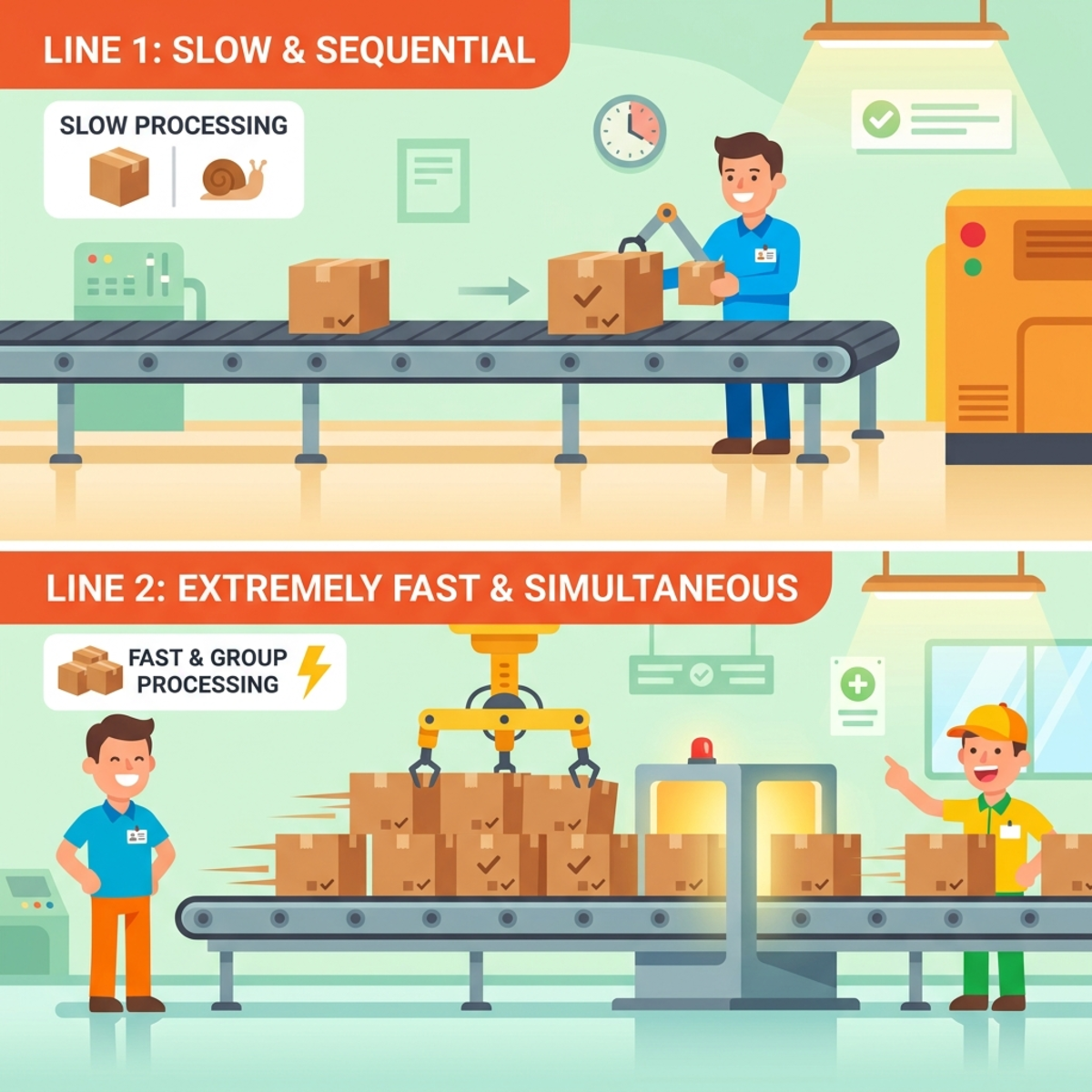
DFlash changes the drafting step. Instead of drafting one speculative token after another, it uses a lightweight block diffusion model to propose a block of tokens in parallel.
Conceptually:
| Approach | Drafting style | Strategic implication |
|---|---|---|
| Classic decoding | Target model generates one token at a time | Simple, reliable, but slow in low-concurrency decode |
| Traditional speculative decoding | Draft model proposes tokens sequentially, target verifies | Can help, but drafting can become its own bottleneck |
| DFlash-style decoding | Block diffusion drafter proposes a block in parallel, target verifies | Better chance of turning idle compute into accepted output |
This is the architectural trick that matters for leaders: DFlash tries to make the draft phase cheap enough that larger speculative blocks become practical.
The research framing is that DFlash uses a lightweight block diffusion model for parallel drafting and conditions the drafter on context features from the target model. In practical terms, the drafter is not guessing from a cold start. It is being guided by what the target model has already understood about the prompt.
I think of this as pinning the target model’s hunch into the draft process. The large model develops a strong internal sense of where the answer is going. DFlash tries to keep that signal available while generating speculative blocks.
Interactive Performance Playground
The interactive component below simulates the mechanical differences between these decoding methods. Run the simulations to see the VRAM bottleneck, sequential drafting errors, DFlash’s parallel block diffusion, and a real-time speed race.
Autoregressive Decoding
One token per forward pass. Every pass re-reads the entire model weights from VRAM — the GPU math cores sit idle waiting for data.
Classic Speculative Decoding (EAGLE 3 / MTP)
A small drafter guesses tokens one after another (auto-regressively). Each token requires its own forward pass — the drafter cannot skip ahead. Then the large target model verifies the entire batch in a single pass. The first wrong prediction kills every token that follows it.
DFlash — Block Diffusion Drafting
Abandons sequential drafting entirely. A lightweight diffusion model fills an entire block of 16 masked token slots simultaneously in 1 pass. The target model's contextual "hunch" is pinned to every layer of the drafter.
The Race — Same 12-Second Clock
Both drafters verify against the same target model. Watch the token gap open up. DFlash proposes larger blocks in parallel, so more tokens are accepted per cycle.
The Governance Lens: DFlash Is a Routing Decision, Not Just a Flag
Tenant administrators should not treat DFlash as something every workload gets by default. It should be part of a routing policy.
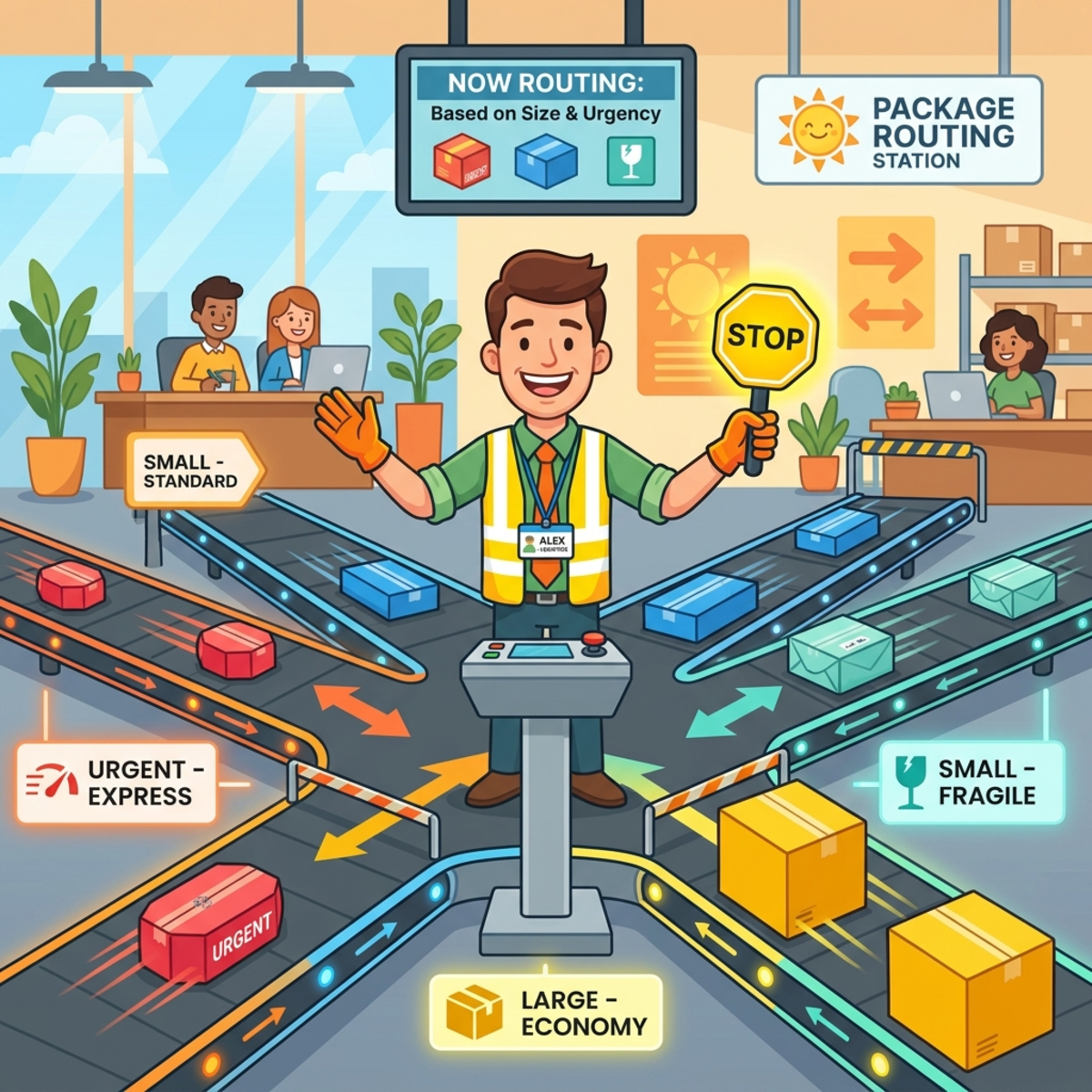
A useful starting point:
| Workload pattern | DFlash fit | Why |
|---|---|---|
| Long-context document reasoning | Strong candidate | More output can be accepted per verification cycle, and latency matters |
| Code generation or code explanation | Strong candidate | Longer structured outputs often benefit from faster decode |
| RAG over large enterprise documents | Strong candidate | Retrieval plus long answer generation can create user-visible wait time |
| Short Q&A | Mixed | Draft overhead may not pay back on tiny responses |
| High-concurrency serving | Mixed to weak | GPU may already be saturated through batching |
| Heavily quantized consumer GPU deployment | Needs testing | Draft-target alignment may degrade depending on model and quantization |
| Regulated workload requiring strict reproducibility | Test carefully | Verify output equivalence and logging behavior before rollout |
The safe governance principle:
Route workloads to DFlash where latency or capacity pressure is real, not where a benchmark looks exciting.
Directional Cost Intuition: What a 3x to 6x Speedup Actually Means
This section is a planning aid, not a quote, benchmark guarantee, or pricing model.
Assume a local LLM service generates 100,000 output tokens during a business day.
| Scenario | Effective decode speed | Approximate decode wall-clock time | Directional implication |
|---|---|---|---|
| Baseline local decoding | 50 tokens/sec | ~33 minutes | Slower experience, less spare capacity |
| 3x effective improvement | 150 tokens/sec | ~11 minutes | Same GPU can clear the queue faster |
| 5x effective improvement | 250 tokens/sec | ~7 minutes | More headroom before buying or renting more capacity |
The most important FinOps nuance:
- If the GPU is already purchased and idle most of the day, DFlash may not reduce direct spend. It improves experience and capacity headroom.
- If you pay by GPU-hour for self-hosted inference, faster decode can reduce the time needed to complete a workload batch.
- If you are capacity constrained, DFlash may delay the next GPU purchase or reduce the number of replicas required for a pilot.
- If your system is already fully utilized through high concurrency, DFlash may not create the same multiplier because the GPU is not idle in the same way.
My rule of thumb:
DFlash saves money only when faster useful tokens let you avoid, shrink, or defer infrastructure. Otherwise, it mainly buys better latency and better user satisfaction.
That is still valuable. Just do not confuse performance improvement with automatic budget reduction.
What Has Been Validated, and What Should Be Softened
Based on public project and research materials, the following claims are reasonable:
| Claim | Confidence | How to phrase it responsibly |
|---|---|---|
| DFlash is a block diffusion approach to speculative decoding | High | This is the central design described by the project and paper |
| DFlash uses parallel block drafting instead of purely sequential drafting | High | This is the key architectural difference |
| Research reports up to ~6x lossless acceleration | High for reported benchmark claim | Say “reported” or “in research benchmarks,” not “guaranteed” |
| llama.cpp has added DFlash support in a release associated with PR #22105 | Medium to high | Mention version or release context, and expect flags/API to evolve |
| Performance varies by backend, model architecture, quantization, and GPU | High | This is critical for governance and testing |
| Qwen 3.6 examples are relevant | Medium | Public examples exist, but model sizes and support details vary |
| Every local deployment will see 6x | Low | Do not claim this |
| High-concurrency production serving will see the same speedup | Low | Treat as workload-dependent |
This is the part many technical writeups skip. The governance answer is not “turn it on.” The governance answer is measure your own workload with your own model, quantization, GPU, concurrency, and acceptance rate.
Hands-On Deployment Notes from the Source
The original source included a practical deployment flow that is worth translating into a governance-friendly pattern.
The setup used three comparable configurations:
- A baseline model endpoint for normal auto-regressive decoding.
- An MTP configuration to compare traditional speculative decoding behavior.
- A DFlash configuration using a compatible draft model alongside the target model.
The important administrator points are not the exact local commands. They are the controlled comparison and the ability to roll back.
| Deployment detail from the source | Why it matters for administrators |
|---|---|
| Baseline, MTP, and DFlash configurations were kept side by side | Enables apples-to-apples comparison instead of isolated benchmark claims |
| Docker/LACP-style local packaging was used | Makes the test repeatable for workstation or lab environments |
| A compatible DFlash drafter model had to be selected | DFlash is model-pair dependent, not a generic acceleration switch |
| Draft-token limits were tunable | Administrators need policy defaults, not unlimited experimentation |
| The current UI/source workflow capped DFlash draft tokens around 15 | Useful operational constraint, but implementation-specific |
| MTP could be pushed higher but showed diminishing returns around the mid-single-digit to ~8-token range in the source tests | Reinforces why bigger speculative windows do not automatically mean better performance |
| Leaderboard-style CSV outputs were captured | Good practice for auditability and repeatability |
One subtle but important point from the source: acceptance percentage is not the same as accepted tokens per verification pass.
For example, accepting 50 percent of a 12-token draft means roughly 6 accepted tokens. Accepting 80 percent of a 4-token draft means roughly 3.2 accepted tokens. The second configuration has a higher acceptance percentage, but the first may still produce more accepted work per verification cycle.
That is exactly the kind of metric interpretation FinOps teams should care about. Do not optimize for the prettiest percentage. Optimize for business throughput, quality, and cost per completed task.
Practical Rollout Plan for Tenant and Platform Administrators
Here is how I would roll this out in an enterprise AI environment.
Step 1: Identify Candidate Workloads
Start with scenarios where users complain about wait time or where long outputs dominate cost.
Good candidates:
- Internal coding assistants
- Local document summarization
- Knowledge-base Q&A with long answers
- Agentic workflows that produce plans, reports, or remediation steps
- Developer workstations or AI lab environments with low concurrency
Poor first candidates:
- Short chat responses
- Highly concurrent shared endpoints
- Workloads where output quality is difficult to evaluate
- Workloads already constrained by retrieval, network, tools, or application logic rather than decoding
Step 2: Define Success Metrics Before Testing
Do not only measure tokens per second. Measure the full value chain.
| Metric | Why it matters |
|---|---|
| Time to first token | User perception starts here |
| Tokens per second | Measures decode throughput |
| End-to-end task latency | Captures retrieval, tools, orchestration, and generation |
| Acceptance rate or accepted length | Explains whether speculative decoding is actually working |
| VRAM overhead | Determines whether the drafter fits without displacing other workloads |
| Output equivalence or quality score | Protects business trust |
| GPU utilization | Shows whether you are turning idle compute into useful work |
| Cost per completed task | FinOps metric that matters more than raw speed |
Step 3: Use a Controlled A/B Harness
Run baseline and DFlash configurations against the same prompts.
Use at least three prompt classes:
- Short Q&A
- Medium business writing or summarization
- Long-context reasoning or code generation
The goal is not to find the best demo. The goal is to identify the boundary where DFlash pays back.
Step 4: Set Administrative Guardrails
Possible guardrails:
- Enable only for approved model pairs
- Require a minimum VRAM headroom threshold
- Cap speculative draft length until workload-specific tests prove benefit
- Route only selected workloads through DFlash-enabled endpoints
- Log latency, acceptance, and fallback behavior
- Keep a baseline endpoint available for rollback
Step 5: Decide With a Routing Matrix
| Question | If yes | If no |
|---|---|---|
| Is generation latency a real user or business problem? | Continue testing | Do not optimize prematurely |
| Is the workload low-concurrency or underutilizing GPU compute? | DFlash may help | Batching may be the better lever |
| Does the drafter fit within available VRAM? | Continue | Avoid memory pressure or downsize elsewhere |
| Does output quality match baseline expectations? | Pilot safely | Stop or restrict the scenario |
| Does cost per task or capacity headroom improve? | Consider rollout | Treat as UX-only improvement |
Hardware and Memory: The Hidden Budget Line
DFlash requires a compatible draft model in addition to the target model. That means extra memory.
In local AI, VRAM is often the real budget line. A few extra gigabytes can decide whether a workload fits on a single GPU, spills to CPU, needs lower quantization, or requires a larger card.
In the original hands-on source, the local test rig was a high-end workstation-class machine: an RTX PRO/RTX 6000-class GPU, AMD Ryzen 9 9950X-class CPU, and 96 GB of RAM. The source also observed a practical VRAM delta: the baseline used roughly 21 GB while the DFlash configuration used roughly 26 GB, meaning the drafter added about 4 to 5 GB of VRAM overhead in that setup.
That detail matters because it turns “free speed” into a real capacity trade-off. If the drafter forces you to lower context length, reduce batching, change quantization, or move to a larger GPU, the economics change.
So the right question is not only:
How much faster is it?
The right question is:
What did I give up to fit the drafter?
| Trade-off | Governance question |
|---|---|
| Extra VRAM for drafter | Does this displace context length, batch size, or another model? |
| More configuration complexity | Can operations support this reliably? |
| Backend-specific behavior | Are we tying performance to a fast-moving implementation? |
| Model-pair compatibility | Who owns validation when models are updated? |
For small teams, this may be acceptable. For enterprise platforms, it belongs in the model onboarding checklist.
When DFlash Can Create Business Value
DFlash is most interesting when it improves one of these four business outcomes:
1. Faster approved tools
If internal AI tools are slow, users route around governance. Faster responses can increase adoption of sanctioned platforms.
2. Better GPU utilization
If decoding leaves compute idle, DFlash can convert some of that idle capacity into useful output.
3. Deferred infrastructure expansion
If a pilot is close to needing another GPU node, a real workload speedup may buy time.
4. More viable local AI patterns
Local AI is often chosen for privacy, data residency, cost predictability, or offline scenarios. Faster local inference makes those trade-offs easier to justify.
When DFlash May Not Help
This is where leadership teams need discipline.
DFlash may not help if:
- Your endpoint is already compute-bound under high concurrency.
- Your bottleneck is retrieval, tool execution, networking, or application orchestration.
- Your model pair is not supported or poorly aligned.
- Quantization changes the behavior enough to reduce acceptance.
- The draft model consumes VRAM that would have been more valuable for context length or concurrency.
- Your outputs are so short that speculative overhead dominates.
In these cases, other levers may be better:
| Problem | Better first lever |
|---|---|
| Many simultaneous users | Batching, queueing, endpoint scaling |
| Slow retrieval | Index tuning, chunking strategy, caching |
| Too much GPU memory pressure | Quantization, smaller model, context policy |
| Short chat latency | Model selection, prompt trimming, caching |
| Governance risk | Routing, audit logs, evaluation harness |
A Simple Decision Guide
Use this as a quick leadership-level filter.
| If your environment looks like this | Recommendation |
|---|---|
| Local workstation, single user, long outputs | Test DFlash early |
| Departmental GPU server, low to medium concurrency | Pilot with routing controls |
| Enterprise shared inference platform, high concurrency | Test carefully against batching alternatives |
| Strictly regulated workload | Require equivalence testing and auditability |
| Heavy Q4 quantized consumer GPU deployment | Validate before assuming gains |
| Short-answer chatbot | Probably not the first optimization |
Benchmarking: Read the Numbers Like a FinOps Practitioner
Public DFlash material reports substantial speedups, including up to roughly 6x in research settings. Some public examples around llama.cpp and local testing show meaningful gains, while other community tests show that certain quantized or consumer-GPU configurations may underperform.
That is not a contradiction. It is exactly how infrastructure behaves.
Benchmarks are not universal truths. They are measurements under constraints.
The source test methodology had several useful controls:
- Greedy decoding was used for reproducibility: temperature 0, top-k 1.
- Concurrency was set to 1, which matches the local AI scenario where a single user or low-concurrency workload benefits most.
- Context sweeps included small and large contexts, including roughly 512, 4K, 12K+, and 36K-token ranges.
- Warm-up runs were used so the first cold run did not distort the result.
- Math 500 was used as a quality sanity check. The source described approximately one discrepancy across 100 examples, around a 1 percent difference, while the DFlash run was materially faster.
- Reasoning mode was avoided for the main quality speed check to keep the benchmark faster and more controlled.
The source also observed that higher-context tests showed stronger gains, with speedups around the 4x range in the larger-context runs and an example around 256 tokens/sec. I would present those numbers as hands-on observations from that setup, not as universal behavior.
When reading any DFlash benchmark, ask:
| Benchmark dimension | Why it changes the result |
|---|---|
| Model architecture | Dense and MoE models can behave differently |
| Model size | Small and large models have different memory and compute profiles |
| Quantization | BF16, FP16, Q8, Q4, AWQ, and other formats can shift alignment |
| Backend | llama.cpp, SGLang, vLLM, Transformers, and MLX may differ |
| GPU | Memory bandwidth, compute capability, and VRAM all matter |
| Context length | Longer contexts may expose different speedup behavior |
| Concurrency | Low-concurrency local serving is the friendliest case |
| Prompt type | Code, math, summarization, and chat have different acceptance patterns |
The leadership translation:
Never approve a capacity plan from someone else’s benchmark. Use public benchmarks to decide what to test, not what to buy.
Recommended Pilot Design
A pragmatic one-week pilot could look like this:
| Day | Activity | Output |
|---|---|---|
| Day 1 | Select model pair and target workloads | Pilot scope and rollback plan |
| Day 2 | Establish baseline metrics | Current latency, throughput, cost per task |
| Day 3 | Enable DFlash in isolated endpoint | Working test endpoint |
| Day 4 | Run prompt suite across short, medium, long tasks | Comparative results |
| Day 5 | Review quality and operations impact | Go/no-go decision |
Decision threshold example:
- At least 25 percent improvement in end-to-end latency for selected workloads
- No measurable quality regression on representative prompts
- VRAM overhead does not force unacceptable model or context trade-offs
- Operational complexity remains supportable
- Rollback path is tested
For serious production adoption, I would add a second phase with concurrency testing, failure injection, cost-per-task analysis, and workload-specific quality evaluation.
My Opinionated Take
DFlash is exciting because it attacks the right problem: the wastefulness of sequential decoding in situations where GPUs are not fully utilized.
But the real breakthrough is not “6x faster.” The real breakthrough is that local AI has another serious optimization lever beyond buying bigger cards or shrinking models.
For IT leaders, this matters because local AI is becoming a governance pattern, not just a hobbyist pattern. Organizations want privacy, control, predictable spend, and data-boundary confidence. But local AI must also feel fast enough to use. DFlash-style speculative decoding may help close that gap.
For FinOps practitioners, the right framing is capacity economics:
Do we get more approved, useful, governed AI work out of the same infrastructure?
If yes, DFlash deserves attention. If no, it is just an impressive demo.
What to Watch Next
The source also pointed toward the next maturity stage for this space: broader model support, more pre-trained drafters, and eventually the ability to train your own draft model for workloads that are not covered out of the box.
That is important for enterprise planning. Today, DFlash should be treated as a targeted acceleration path for supported model pairs. Over time, if training recipes and backend integrations mature, this could become a more general platform capability across self-hosted inference stacks such as llama.cpp, SGLang, vLLM, Transformers, and MLX-style local runtimes.
The governance implication is simple:
Start with approved model pairs today. Prepare for a future where draft-model lifecycle management becomes part of model operations.
Final Verdict
DFlash is not a universal accelerator. It is a workload-sensitive capacity lever.
Use it when:
- You run local or self-hosted inference.
- Your workloads are low-concurrency or underutilize GPU compute during decoding.
- Output length is meaningful enough for speculative decoding to pay back.
- You have spare VRAM for the draft model.
- You can validate quality and latency against real enterprise prompts.
Be cautious when:
- Your serving layer is already highly concurrent and well batched.
- You rely on aggressive quantization.
- Your workloads are short and latency is dominated elsewhere.
- You cannot support the operational complexity of model-pair validation.
The practical path is simple: do not roll it out because the benchmark is loud. Put it behind a controlled endpoint, route the right workloads, measure cost per completed task, and keep the rollback path clean.
That is how you turn an inference optimization into a governed business-value decision.
Sources and Validation Notes
The article was revised against public information available as of 2026-07-08. Product behavior, backend support, flags, and model compatibility can evolve quickly, so validate against your own target runtime before production rollout.
- DFlash paper on arXiv: https://arxiv.org/abs/2602.06036
- Z Lab DFlash project page: https://z-lab.ai/projects/dflash/
- DFlash GitHub repository: https://github.com/z-lab/dflash
- llama.cpp DFlash discussion: https://github.com/ggml-org/llama.cpp/discussions/21569
- llama.cpp release note reference for DFlash support associated with PR #22105: https://newreleases.io/project/github/ggml-org/llama.cpp/release/b9831
- Example community/testing notes showing workload and quantization sensitivity: https://github.com/lucasacchiricciardi/llama-dflash-rocm
Read next