The False Economy of Budget LLMs: GPT 5.5 vs Mini

Writer

As language models advance, a clear architectural divergence has emerged. On one side stand flagship tiers like GPT 5.5 Medium, capable of flawless logic but accompanied by astronomically high API pricing and rapid subscription depletion. On the side sits a temptation: running lower-effort reasoning tiers, downscaled mini models, or legacy developer variants to preserve capital.
To separate economic reality from wishful thinking, we executed a rigorous evaluation using a standardized 4-project benchmark suite to test if you can truly cut costs without breaking production code.
The Contenders & The Legacy Sunset
This evaluation covers four specific configuration tiers across distinct evolutionary cycles:
- GPT 5.5 Medium: The high-reasoning baseline.
- GPT 5.5 Low: The same underlying model architecture but restricted to lower reasoning steps.
- GPT 5.4 Mini: The ultra-cheap, lightweight production tier.
- GPT 5.3 Codex: The legacy champion built specifically for code generation.
Industry Update: The Codex Deprecation
A critical factor for teams clinging to legacy infrastructure is the recent official announcement by Thibault at OpenAI regarding the sunsetting of GPT 5.3 Codex. While it remains accessible via the API for now, its removal from core developer workflows has triggered significant community friction. Many engineers still leverage Codex due to its specific optimization for syntax generation, making its impending retirement a major disruption.
Head-to-Head Benchmarks: Analyzing the Tiers
Each model was subjected to five prompt attempts per project, with a maximum allocation of 5 points per benchmark.
1. Filament Admin Panel Implementation
This test evaluated UI generation and administration panel workflows. Both the Medium and Low configurations successfully cleared the hurdle, but their operational footprints differed slightly.
| Model Tier | Score | Execution Time | Average Cost per Prompt |
|---|---|---|---|
| GPT 5.5 Medium | 5 / 5 | 3.0 minutes | $0.99 |
| GPT 5.5 Low | 5 / 5 | 2.5 minutes | $0.90 |
Insight: For straightforward structure tasks, dropping down to a Low reasoning setting yields a modest speed increase and minor financial savings without sacrificing output integrity.
2. Fluent Validation Package Integration
Things grew complicated when evaluating complex architecture logic. The objective was to implement strict validation while actively avoiding database performance bottlenecks.
- GPT 5.5 Medium: Achieved a clean 5/5 score.
- GPT 5.5 Low: Scored 4/5.
The Failure Mode: On its failed attempt, GPT 5.5 Low encountered an N+1 query problem. Instead of resolving it cleanly, it spiraled into a broken workaround. This looping behavior increased execution time and consumed extra tokens, driving its average cost up to $1.29—making it more expensive than the flagship tier.
Warning: Dropping reasoning depth introduces a risk window where models generate broken code patterns, wiping out any theoretical cost savings through troubleshooting overhead.
3. React Frontend Component Architecture
Testing interactive component construction revealed the best-case scenario for downscaled reasoning.
| Model Tier | Score | Execution Time | Average Cost per Prompt |
|---|---|---|---|
| GPT 5.5 Medium | 5 / 5 | 3.0 minutes | $0.88 |
| GPT 5.5 Low | 5 / 5 | 2.0 minutes | $0.64 |
Insight: Frontend component modularity is a highly repeated pattern in web development training data. Lower reasoning models breeze through these tasks with clear speed and cost benefits.
4. The Danger Zone: Testing Mini and Legacy Tiers
The ultimate test required building a complete Laravel API Project. This benchmark brought all four models into the mix, revealing structural flaws in both GPT 5.4 Mini and GPT 5.3 Codex.
Architectural Regressions & Over-Engineering
While 5.4 Mini and 5.3 Codex offer massive token-per-dollar discounts on paper, multi-tab terminal testing using the Ghosty emulator exposed serious implementation bugs:
- GPT 5.4 Mini Regression: The model silently introduced a classic N+1 query problem into the API endpoints, a flaw that would severely degrade production database performance under load.
- GPT 5.3 Codex Regression: The legacy model over-engineered a standard pagination request. It forced the
pageparameter to process as an arbitrary nested array. It appeared to blindly mimic strict JSON API specifications despite no such constraint existing in the prompt instructions.
The Problem of Framework Decay
Relying on older legacy tiers like Codex introduces a silent hazard: knowledge freezing. AI providers do not continuously retrain or update historical models on modern framework updates. They target engineering resources on current systems like 5.5 and upcoming iterations like 5.6.
Using an older model means writing code with a tool that is fundamentally blind to modern security patches, language features, and architectural best practices.
Modern Budget Optimization Blueprints
If lowering reasoning settings inside a flagship tier yields minimal savings, and utilizing older models introduces codebase corruption, how do engineering teams optimize their spend?
The answer lies in changing your workflow architecture, rather than downgrading your model.
Strategy A: Geographic Provider Shifting
For absolute cost reduction, teams are increasingly migrating standard generation tasks away from Western ecosystems completely, utilizing high-performance alternatives like the Chinese Kimi model suite, which offers highly competitive pricing parameters.
Strategy B: The Router Hybrid Workflow (Plan vs. Execute)
The most resilient production layout decouples the Planning Phase from the Implementation Phase:
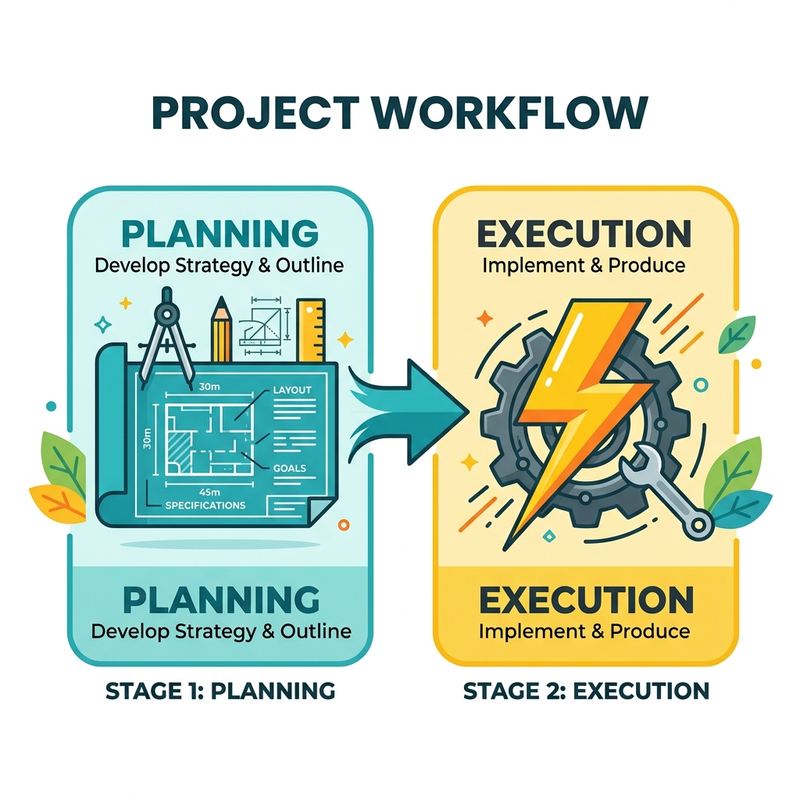
- The Planner Tier: Route your initial architecture, database schema design, and edge-case mapping to an expensive flagship model (e.g., GPT 5.5 Medium in a structured plan mode).
- The Executor Tier: Pass that highly detailed, explicit blueprint to low-cost, ultra-fast engine models like DeepSeek Flash, Gemini Flash, or agent systems like Cursor Composer to write the raw syntax.
This hybrid approach ensures your code quality is anchored by premium reasoning, while the bulk of your token consumption is offloaded to highly efficient execution engines.
Read next