Wasm Components & MCP: Pluggable AI Architectures

Writer

The intersection of Artificial Intelligence and developer tools is evolving at a breakneck pace. As we rely more heavily on AI agents to assist with coding, planning, and execution, a critical challenge has emerged: How do we safely, efficiently, and universally extend these agents with new capabilities?
In this article, we will dive deep into the transformative role WebAssembly (Wasm) is playing in the AI agent revolution. By combining WebAssembly Components with modern interoperability protocols like the Model Context Protocol (MCP) and the Agent Client Protocol (ACP), the industry is moving toward a highly secure, fully pluggable ecosystem.
Here is a technical deep dive into how Wasm components are redefining agentic engineering.
1. Beyond the Browser: WebAssembly and the Component Model
Most developers know WebAssembly as a virtual, portable bytecode instruction set originally designed to run native code (like C++ or Rust) securely inside the browser, compiling down to native instructions (x86, ARM). However, the ecosystem has moved far beyond sandboxing simple web apps.
The Rise of WebAssembly Components
While core Wasm provides the portable bytecode, WebAssembly Components represent the evolution beyond raw instructions. They address the packaging and linking of that code. Think of components as the Wasm equivalent of Windows DLLs, Linux ELFs, or macOS Mach-O files—but fully typed and completely agnostic to the host system.
Key advantages of Wasm Components include:
- Fully Typed Boundaries: Components define explicit, strictly typed interfaces. If a component expects a string parameter at the boundary, it will only accept a string.
- Write Once, Run Anywhere: A component compiled from Rust, Python, JavaScript, Kotlin, or Swift can run identically in a browser, on a server, behind an HTTP API, via CLIs, or inside an AI agent’s chat interface.
- Zero-Trust Security: Components are deterministic and securely sandboxed. They operate on a principle of least privilege, meaning they cannot access file systems, environment variables, or networks unless explicitly brokered by the host.
2. Everything is a Plug-in
To understand Wasm’s utility in AI, you have to adopt the “plug-in” mental model.
Viewing platforms (browsers, editors, routers, AI agents) as plug-in loaders is crucial. A web browser is essentially a native application that loads untrusted plug-ins (websites) from the network. Code editors load extensions. AI agents are no different; the chat window itself is just a shell that relies on remote LLMs and local tools.
Historically, extending AI tools locally meant writing ad-hoc Bash scripts or running Python subprocesses. This is risky; a traditional subprocess inherits the broad permissions of the parent application, leaving your machine vulnerable to prompt injection attacks where an agent might be tricked into context poisoning or malicious credential scraping (like scanning for SSH keys or crypto wallets).
WebAssembly Components provide the ultimate secure plug-in system: lightweight, language-agnostic, brokered access, and zero default permissions.
3. Solving the Distribution Problem: The OCI Meta-Registry
For a plug-in system to thrive, developers need a way to build, share, and discover packages. In the container world, Docker Hub solved this. The Wasm community is addressing the historical gap in Wasm package distribution by leveraging that exact same infrastructure.
Instead of reinventing the wheel and building a brand-new, expensive registry from scratch, the Wasm community adopted the Open Container Initiative (OCI) image spec. This allows developers to publish Wasm components to existing, robust infrastructure like GitHub Packages, Azure Container Registry, or Docker Hub.
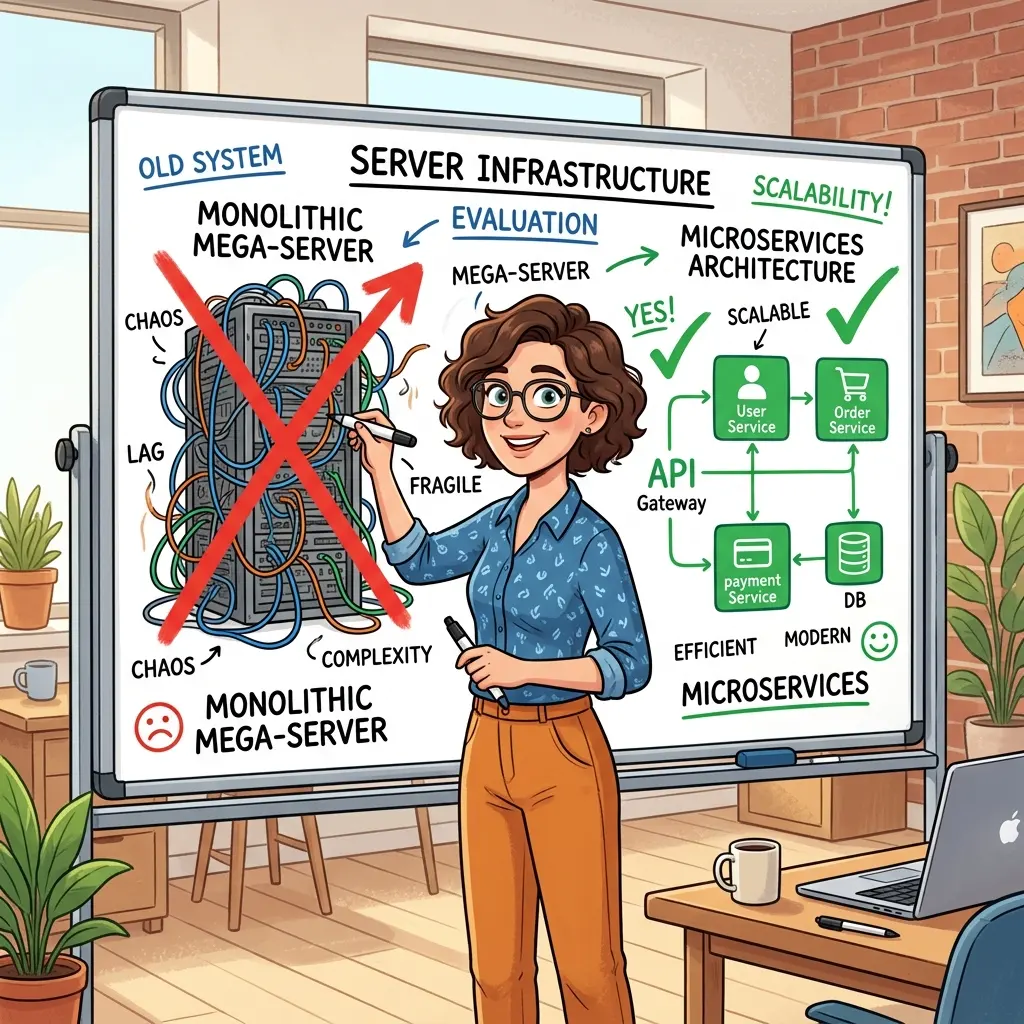
To connect this fragmented ecosystem, a new Meta-Registry is being developed. Instead of hosting massive binaries and incurring bandwidth costs, the meta-registry acts as an advanced search index:
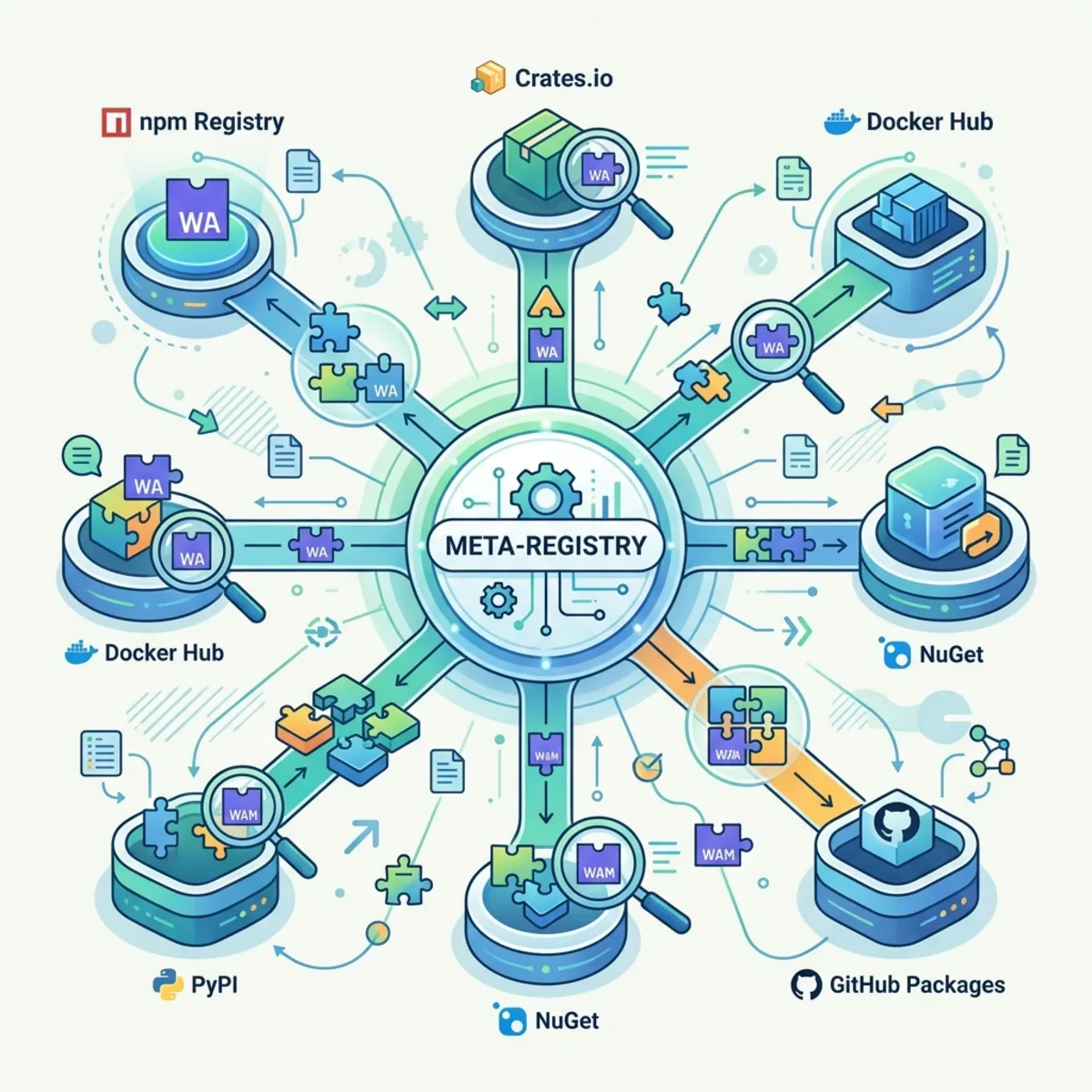
- It ingests metadata, parses typed interfaces, and maps dependencies (type-system links).
- It enables Reverse Interface Search. Because components are typed at the boundary, you can query the registry for specific capabilities. You can search by implemented APIs (e.g., “Find me every component across all OCI registries that implements an AI editor extension API and requires file-system access”).
4. MCP and Wassette: Bridging Wasm to AI Agents
The Model Context Protocol (MCP) is the current industry standard for giving AI agents access to external tools. However, traditional MCP transports rely on heavy HTTP servers or spawning local subprocesses (JSON-RPC over stdio)—both of which are resource-heavy and pose broad security risks due to inherited permissions.
Enter Wassette.
Wassette (Wasm + MCP) is a secure MCP server built on the Wasmtime runtime that acts as a secure bridge. Instead of routing MCP requests to a shell script or an HTTP server, Wassette dynamically loads WebAssembly Components as tools.
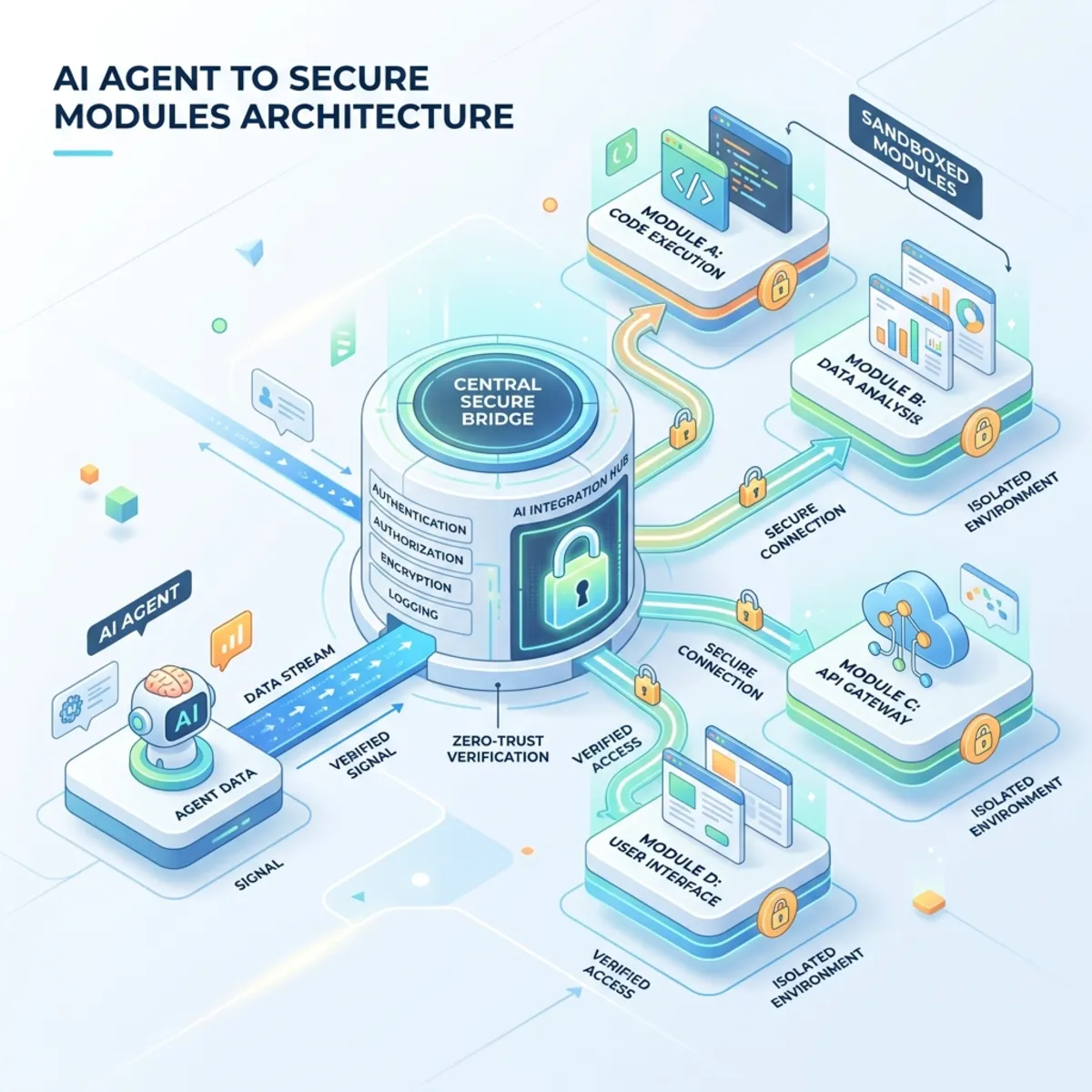
- Dynamic Translation: Wassette bridges Wasm’s strongly typed interfaces (defined via WebAssembly Interface Types, or WIT) directly into JSON Schema-backed MCP tools on the fly.
- Security by Default: If you ask an agent to use a “Time” component, and that component unexpectedly tries to make a network request to an external domain, Wassette’s capability-based zero-trust security model blocks it. The agent can be taught to autonomously pull down Wasm tools, knowing they cannot break out of their strict sandbox.
5. Skills and Dynamic CLIs
The power of Wasm components is also extending directly to the command line. A new component CLI is in development that can execute raw Wasm library functions straight from the terminal. It inspects the component’s API (e.g., get_time(timezone)) and allows for the dynamic generation of CLI flags, subcommands, and help text without requiring custom command-line wrapper code.
This pairs perfectly with Agent Skills (markdown documents or shell scripts that teach agents operational workflows). You can write a skill that instructs a terminal agent on how to use the CLI to fetch a Wasm component from an OCI registry, load it, and execute it autonomously locally to solve a problem.
6. The Agent Client Protocol (ACP) and the Pluggable Stack
While MCP provides plug-ins for agents, the Agent Client Protocol (ACP) flips the script and makes the agent itself a plug-in.
Spearheaded by the Zed editor alongside JetBrains and Mozilla, ACP decouples the AI model from the IDE interface. Just like the Language Server Protocol (LSP) decoupled languages from editors (stopping developers from needing a different editor for every programming language), ACP prevents you from needing a custom, forked editor for every new AI provider. You bring your own agent and plug it directly into your ACP-compatible IDE.
Recursive ACP & The Pluggable Stack
The most exciting architectural shift on the horizon is the concept of Recursive ACP. Because ACP requests can be chained (similar to HTTP proxies routing traffic), the entire AI agent stack can be deconstructed into a series of pluggable Wasm components:

- Providers: Hot-swap different backend models without changing the interface.
- Modes: Swap out how the agent fundamentally behaves (e.g., chat modes). Instead of a standard “Plan Mode” that writes a markdown file locally, a custom Wasm mode could automatically open, update, and close GitHub issues as the agent formulates its plan.
- Context: Treat system prompts and behavioral rules (like
agents.md) as standalone, easily integrated plug-ins. - Skills: Seamlessly inject specialized capabilities.
Conclusion
The industry is moving away from monolithic AI clients and deeply integrated, vendor-locked editors. By treating WebAssembly Components as the universal standard for secure, typed plug-ins, and routing them through interoperability layers like MCP and ACP, we are entering a new era of fully composable, natively secure, and universally adaptable AI agents.
Read next